
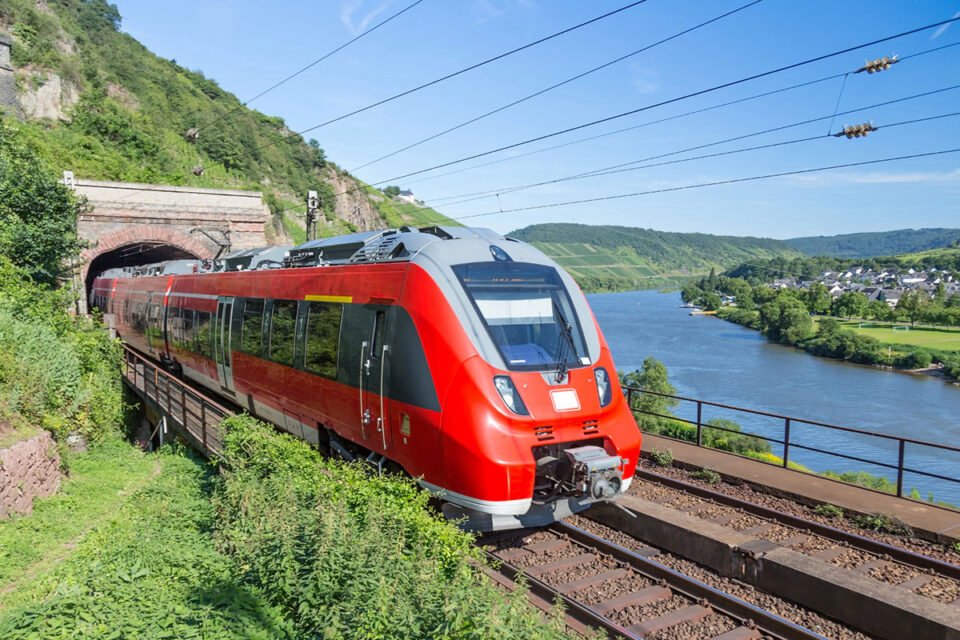
Germany is one of Europe’s easiest countries for solo train travel.
Rail lines connect major cities, smaller towns, scenic valleys, and regional bases, so a rental car is rarely needed.
Train stations often sit close to old towns, museums, riversides, public transit, and cultural districts.
Solo arrivals feel simpler because many city centers begin near the station.
Useful trip planning can include fast city hops, slower scenic rail days, flexible tickets, and easy day trips.
Why Germany Is Great For Solo Train Travel
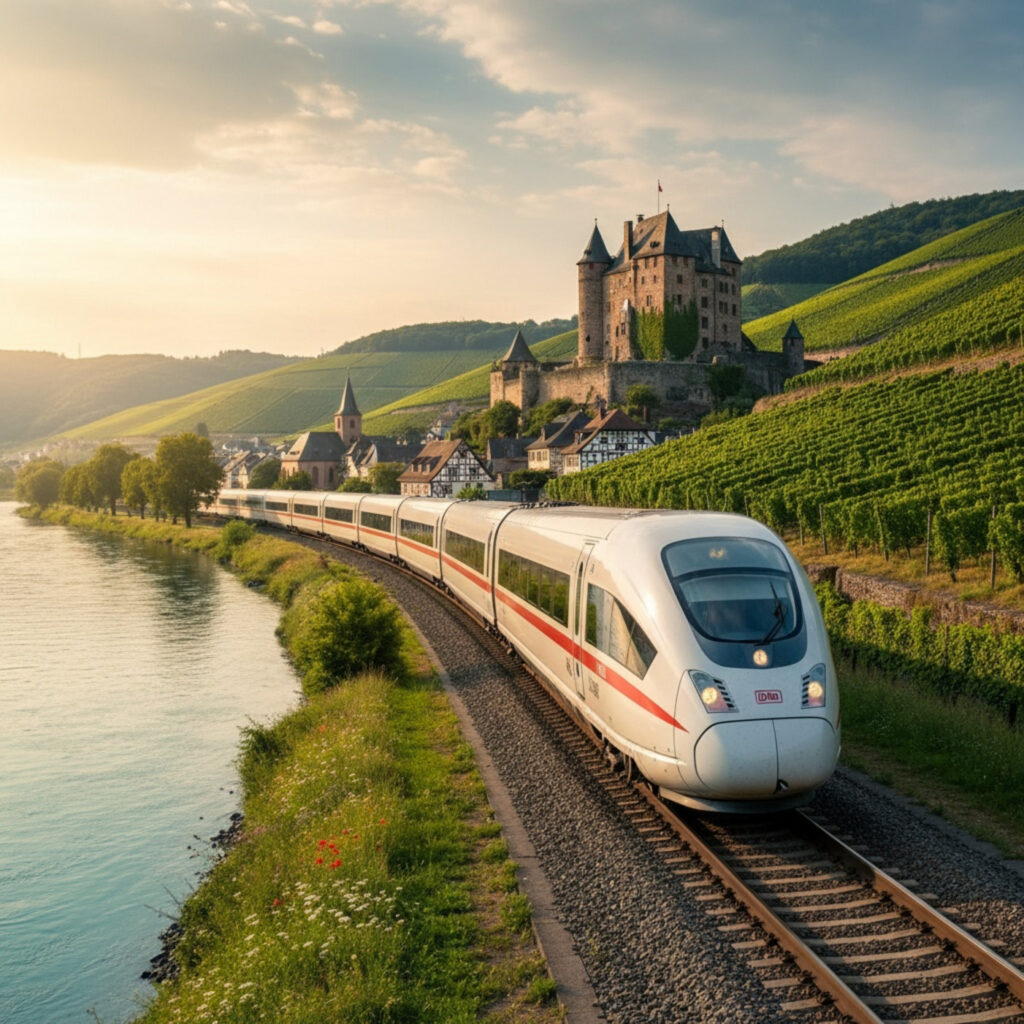
Germany has an extensive rail system with over 33,000 km of track, 5,400+ stations, and direct links between every major German city.
Solo trips work especially well in two styles.
Fast city-to-city travel connects places like Berlin, Hamburg, Cologne, Frankfurt, Dresden, and Munich.
Slower regional travel fits scenic areas such as the Rhine Valley, Moselle Valley, Bavaria, and the Black Forest.
Many main stations place travelers near old towns or creative cultural districts. Arriving alone feels easier when hotels, cafés, museums, river walks, and local transit are close by.
Solo travelers can keep plans flexible, add scenic detours, skip airport-style transfers, and use stations as practical bases for day trips.
Germany’s rail setup also makes it easy to combine famous cities with smaller cultural stops.
Easy Germany Train Routes For First-Time Solo Travelers
Bavaria Route: Munich → Nuremberg → Füssen
Best fit: old towns, castles, beer gardens, Christmas markets, Alpine scenery, and Bavaria-focused travel.
Munich works as a base for the old town, Marienplatz, cathedral, English Garden, beer gardens, nearby lakes, and mountain day trips.
Nuremberg adds medieval streets, Imperial Castle, Dürer House, Germanisches Nationalmuseum, nightlife, and one of Germany’s best-known Christmas market settings.
Nuremberg is around 1 hour 40 minutes by train after Munich and around 2 hours by train after Frankfurt.
Füssen is a useful day trip out of Munich for Neuschwanstein Castle and Alpine scenery. Regional trains take about 2 hours and usually depart every 2 hours.
Munich works as a base for the old town, Marienplatz, cathedral, English Garden, beer gardens, nearby lakes, nightlife, and adult city services such as escort München.
Classic Big-City Route: Frankfurt → Cologne → Hamburg → Berlin → Dresden → Munich
Best fit: first-time visitors who want a broad overview of Germany.
Route combines practical transport hubs, famous sights, museums, nightlife, river walks, and historic old towns.
Frankfurt works well as an arrival city because it is a major rail hub with easy access to the Main River museums, Römer, Old Sachsenhausen, and international rail links.
Cologne creates one of Germany’s easiest train arrivals because the cathedral sits directly beside the station.
Hamburg and Berlin are simple to pair by rail. Train travel between them takes about 1 hour 40 minutes.
Dresden adds Baroque architecture, Frauenkirche, Zwinger, Semperoper, and an easy station gateway into the old town.
Suggested length: 10 to 14 days.
Scenic Western Route: Frankfurt → Rhine Valley → Koblenz → Cologne
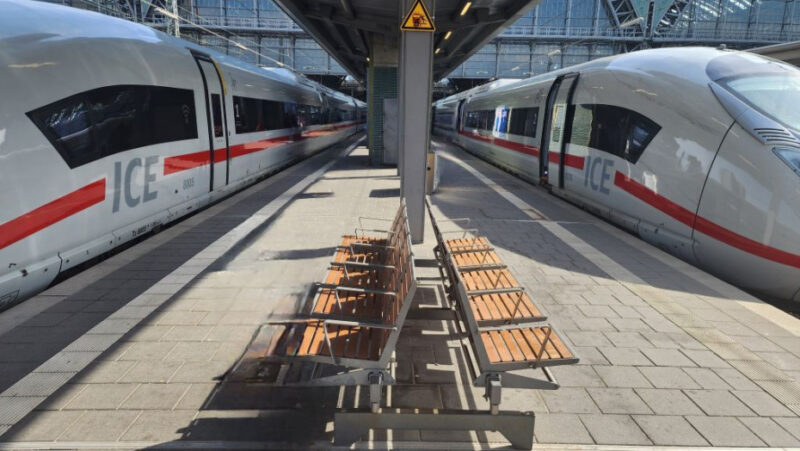
Best fit: castles, river views, vineyards, wine towns, and slower solo travel.
Rail travel via the Rhine Valley adds one of Germany’s most scenic train panoramas instead of using the direct Frankfurt to Cologne option.
Koblenz is a strong stop because it sits where the Rhine and Moselle meet. It also works as a base for both valleys. Old town access is easy near the station, and the cable car to Ehrenbreitstein Fortress gives wide views over the German Corner.
Rhine and Moselle rail lines are especially scenic, with river views, vineyards, hills, and castle ruins.
Route suits travelers who want scenery without complicated logistics.
Northern Culture Route: Hamburg → Berlin → Leipzig → Dresden
Best fit: museums, music, nightlife, architecture, cafés, and creative city energy.
Hamburg is strong for maritime atmosphere, Speicherstadt, the old town, Landungsbrücken, Binnenalster, Elbphilharmonie, and Miniatur Wunderland.
Berlin offers history, cultural variety, major museums, the government district, Brandenburg Gate, Museum Island, Kreuzberg, and alternative neighborhoods.
Leipzig is practical for solo travelers because many major sights sit within about 1.5 km of the central station. Easy stops include St. Thomas Church, St. Nicholas Church, the Bach Museum, Auerbachs Keller, Karlstadt, and the zoo.
Dresden is easy to add after Berlin or Leipzig. Berlin to Dresden takes about 2 hours by train, while Leipzig to Dresden takes about 1 hour.
Suggested length: 7 to 10 days.
Southwest Route: Frankfurt → Heidelberg → Freiburg
Best fit: romantic old towns, riverside scenery, student atmosphere, cafés, and Black Forest access.
Heidelberg is strong for the Neckar River, Germany’s oldest university, Baroque old town, castle views, and Hauptstrasse, one of the world’s longest pedestrian streets.
Heidelberg is about 50 minutes by train after Frankfurt and about 45 minutes after Stuttgart.
Freiburg suits travelers who want a smaller, calmer city with a car-free old town, cathedral, cafés, and quick access to the Black Forest. Rail access to the Black Forest takes about half an hour.
Route works well for solo travelers who prefer smaller cities alongside major hubs.
Frankfurt → Rhine Valley/Koblenz → Cologne → Hamburg → Berlin → Leipzig → Dresden → Nuremberg → Munich.
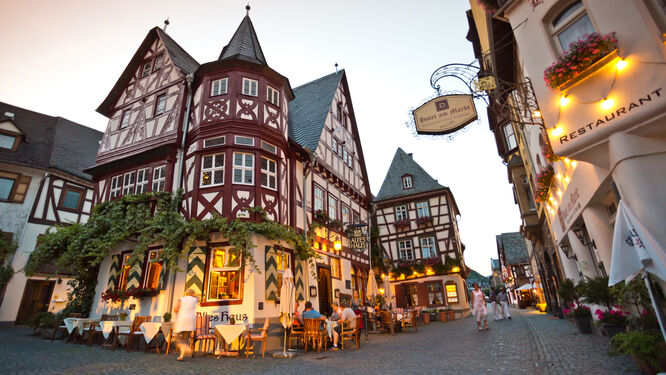
Add Füssen as an optional castle day trip out of Munich.
Route mixes fast ICE connections with slower regional rail days, giving solo travelers a broader view of Germany’s cities, rivers, and historic towns.
For a fuller trip, spend extra nights in Koblenz, Heidelberg, Freiburg, or Nuremberg instead of adding too many stops.
Best Time To Travel Germany By Train
Spring brings comfortable sightseeing weather and lighter crowds.
Summer offers long days and lively cities, but trains and hotels can be busier.
Autumn works especially well for the Rhine and Moselle valleys, wine scenery, and colorful countryside.
Winter is best for Christmas markets, especially in Nuremberg, Cologne, Dresden, Munich, and other historic cities.
Busy periods include Fridays, Sundays, school holidays, Oktoberfest weekends, Christmas, and New Year. Seat reservations on longer ICE, IC, and EC trips can make travel easier during those times.
Tickets Solo Travelers Should Know
DB Navigator is one of the most useful tools for solo rail travel in Germany. Use it to plan routes, buy tickets, check platforms, receive delay updates, and store digital tickets. Set it up before arrival and download tickets for offline access.
Super Sparpreis fares work best for fixed long-distance plans. Advance prices can start at €17.90 when booked early.
Sparpreis fares suit leisure travelers who want lower prices with a little more flexibility than the cheapest ticket type.
Flexpreis fares work best for solo travelers who want freedom to choose another train on the same day
Deutschland-Ticket is useful for regional trains, S-Bahn, U-Bahn, trams, and regional buses. It does not include ICE, IC, EC, seat reservations, or international routes.
German Rail Pass can suit international visitors who want flexible multi-city travel across Germany.
Seat reservations are worth considering on longer trips, Friday afternoons, Sunday evenings, school holidays, Oktoberfest weekends, Christmas and New Year travel, or any popular ICE trip over two hours.
Summary
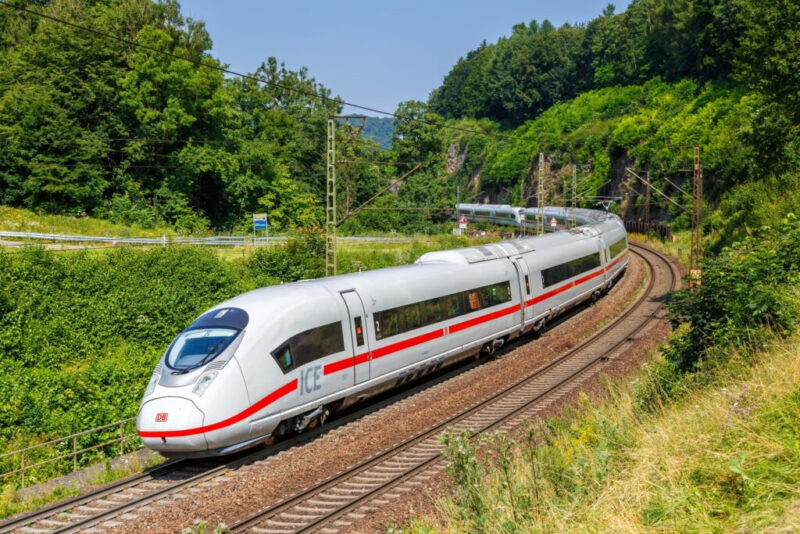
Germany is an easy country to plan by train because major cities, scenic valleys, and smaller cultural stops connect well by rail.
Solo travelers can build a trip around fast ICE routes, slower regional trains, flexible tickets, and central stations that simplify arrival days.
A strong first trip can start in Frankfurt, add the Rhine Valley and Koblenz, continue to Cologne, Hamburg, Berlin, Leipzig, Dresden, Nuremberg, and Munich, then include Füssen as a castle day trip.
Route gives solo travelers big cities, scenic rail sections, historic towns, and practical logistics without needing a car.