

If you’ve been in the online casino industry long enough, you probably remember how the experience was at first. You had to set aside time to sit at a desktop computer to access the experience.
But this is no longer how it works today. And, of course, that’s not to say desktop play has become entirely obsolete because there’s still a considerable number of players who prefer the larger screen experience.
But as true as that is, desktop gamblers are now part of a shrinking minority. According to AppNize, just about 15% of users play on traditional PCs, compared to 60% on mobile devices.
Of course, the shift to mobile-first gambling didn’t happen because desktop platforms became worse.
No, it happened mainly because mobile devices became good enough and eventually the most convenient option available.
And once convenience enters the equation, user behaviour tends to change in no time. To avoid being left behind, operators like JackpotCity have also been aligning with this trend.
Most of them now support fully optimized mobile platforms, responsive web apps and lightweight game versions that load smoothly even on mid-range smartphones.
The result is an industry where accessibility is now one of the biggest competitive advantages. It’s no longer enough for a casino to simply offer a wide selection of games.
The real question is how smooth those games feel on small-screen devices. And now that operators are paying attention to such questions, it’s not hard to see why most of the play now happens on mobile.
The rise of “anywhere, anytime” play
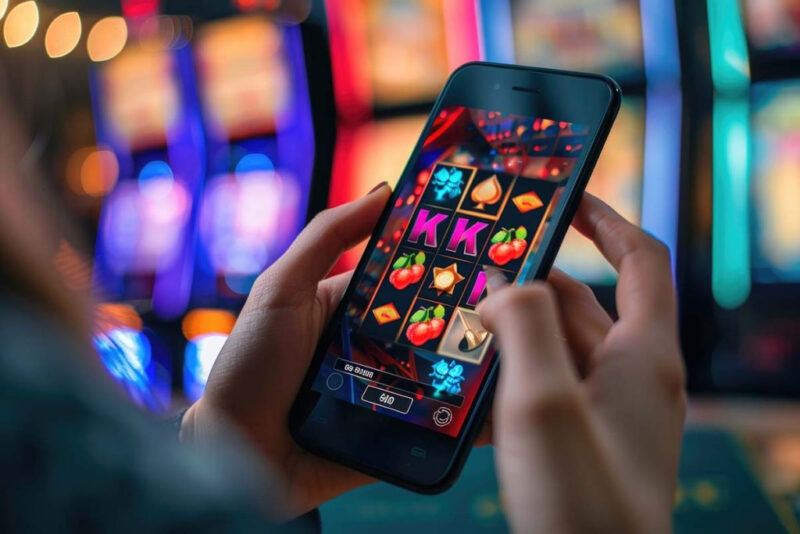
As already mentioned, digital gambling was location-based during its early days. To access your favorite game, you had to be in a very specific setting. It wasn’t something you casually slipped into during the day.
But, given the nature of modern life, that model may not always be appropriate. Picture a modern professional, for instance. When they leave their workplaces in the evening, they may have pending emails to respond to before the next day.
Other professionals could be having an evening leadership class waiting for them. If these same individuals have to squeeze entertainment into their already tight schedules, then flexibility becomes a necessity.
Such people may not be comfortable with experiences that demand full attention blocks. But when a platform allows them to access entertainment without disrupting the rhythm of their day, it quickly becomes appealing.
That’s where mobile-friendly casinos like JackpotCity come into play. By allowing the experience to follow players, these casinos make it possible to engage while commuting, during a lunch break or in those in-between moments life throws at you.
As a result, players become more likely to gamble using their phones, which helps explain why SkyQuest Technology values the global mobile gambling market at more than $92 billion.
Game design has evolved for smaller screens
Yes, convenience is king when it comes to online casino gaming. But imagine clicking on a platform on your phone only to be met with confusing menus.
Or consider a scenario where the interface technically works, but the buttons are too tiny to tap. Well, a considerable number of players won’t tolerate those experiences.
In fact, according to Baymard, mobile users are five times more likely to leave after encountering such websites.
If that’s not enough, Mountain Laurel Digital claims that 88% of users won’t return if the experience is poor.
Based on these statistics, it’s clear the casino industry would not have survived the mobile shift if game design hadn’t evolved in step with user expectations. But since it did, the industry now enjoys multicultural influence.
Thanks to responsive design, a player doesn’t have to zoom in to read small text or struggle to find the spin button on a crowded interface.
Since platforms like JackpotCity automatically adjust to the screen, the experience no longer feels like a scaled-down version of desktop websites.
Also, developers prioritize information so that players see only what they need at any given moment. Even classic games like roulette have been redesigned with mobile behaviour in mind.
Most of them guide attention step by step rather than overwhelming users with information.
Mobile payments have made deposits effortless
Convenience doesn’t end with gameplay. For many players, the deciding factor is how quickly they can move money in and out of their accounts. In the desktop era, deposits often meant typing in long card numbers and waiting for confirmation emails.
On mobile, that friction has largely disappeared. Digital wallets, one-tap payment options and biometric verification mean a deposit can be completed in seconds, often without leaving the game screen.
This matters more than it might seem. A player who decides to spin a few rounds during a coffee break doesn’t want to spend half of that break navigating a payment form.
When the transaction takes as little effort as unlocking the phone, the whole experience feels seamless from start to finish.
Security has kept pace as well. Fingerprint and face recognition add a layer of protection that traditional desktop logins never offered, which helps players feel more comfortable managing real money on a handheld device.
Operators like JackpotCity have integrated these payment and verification methods directly into their mobile platforms, removing yet another reason to reach for a laptop.
When funding an account is this simple, it’s easy to see why phones have become the default choice.
Better technology means better games
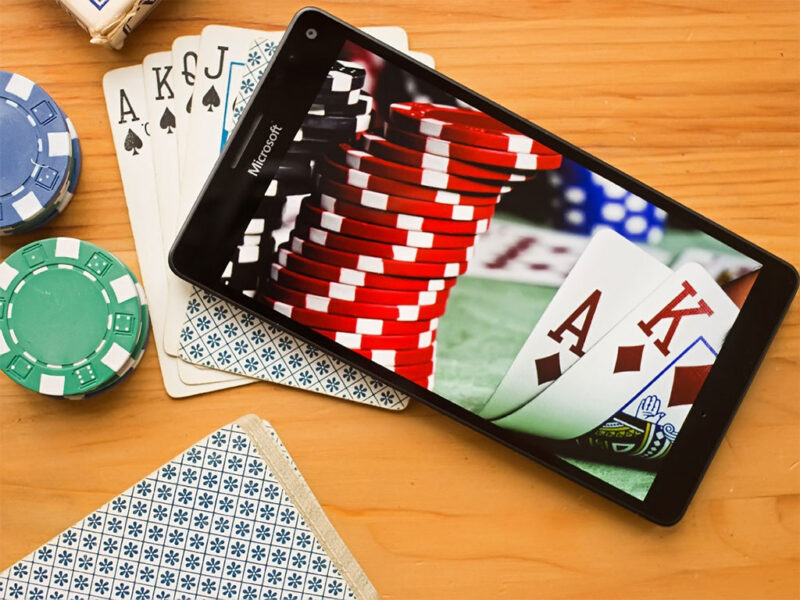
The rise of better smartphones also plays a significant role. Today, these devices have become mini-computers in people’s pockets, allowing them to access HD gaming experiences without compromising visual quality.
Now add that to the fact that 4G and 5G networks are available in many regions, and you get even more reasons as to why mobile gaming is now the standard.
The widespread availability of these networks means players no longer have to worry about frustrating lags during critical moments.
At the same time, casinos like JackpotCity can now push the boundaries of what mobile casino games look like without worrying about whether the average device can keep up. This has led to richer visuals and more realistic game interfaces.
And when gamblers who already have a taste for great experiences encounter those interfaces, they are more likely to engage, which helps further explain why more gamblers play on mobile.