
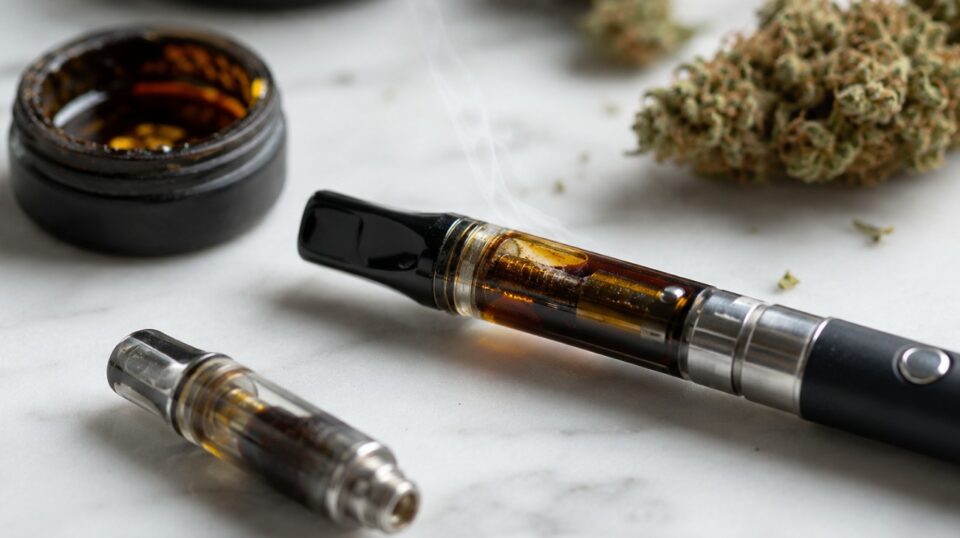
A burnt hit can taste dry, harsh, metallic, bitter, or acrid, and it may leave a scratchy sensation in the throat. Such flavor usually points to a problem involving oil flow, coil temperature, wick saturation, or hardware condition.
Burnt flavor does not automatically mean an entire cartridge is defective.
In many cases, excessive heat, poor oil movement, repeated draws, or low oil levels prevent proper saturation around the heating element. Persistent bitter flavor, however, can signal permanent damage to a coil or wick.
Several sensations can help distinguish an ordinary harsh hit compared with a developing hardware problem:
- Dry or sharp vapor may indicate that insufficient oil is reaching the wick.
- Metallic or acrid notes can appear when coil temperature climbs too high.
- A bitter taste that continues across multiple draws can point to scorched wick material.
Knowing how heat, oil viscosity, airflow, and cartridge position affect vapor production can help reduce burnt-tasting hits and protect cartridge hardware.
Excessive Heat or Voltage
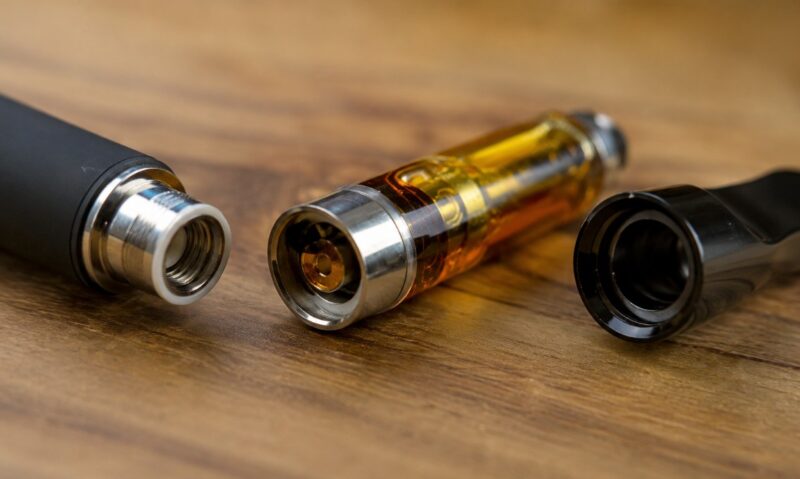
High voltage can raise coil temperature too quickly. Instead of heating cannabis oil at a controlled rate, an overly hot coil can scorch oil near the heating element and create a harsh or bitter taste.
Useful voltage figures provide a practical starting point for temperature control:
- Around 2.0 to 2.4 volts can be used as a lower starting range.
- Roughly 2.4 to 3.2 volts works as a useful operating range for many cartridges.
- Gradual increases are preferable when vapor production feels too weak.
Live resin and full-spectrum oils can be especially sensitive to high temperatures because many aromatic compounds react poorly to excessive heat.
Too much voltage may reduce flavor quality while making each draw hotter and harsher.
Hardware design also plays a role in heat control, and ASM VAPE offers all-in-one devices with ceramic heating systems, stable voltage output, and adjustable heating options intended to support more consistent vaporization.
Too much voltage may reduce flavor quality while making each draw hotter and harsher.
Lower settings also give oil more time to heat evenly. Users experiencing sudden bitterness, throat irritation, or unusually hot vapor may benefit by reducing voltage before taking another draw.
Poor Wick Saturation
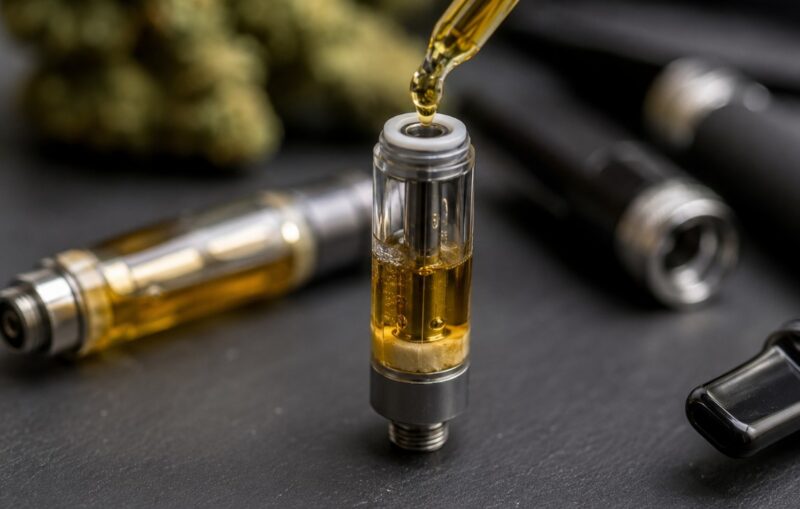
Cannabis oil usually has a thicker consistency than nicotine e-liquid.
Greater viscosity means oil often needs extra time to soak into the wick and reach areas surrounding the coil.
Using a new cartridge too soon can leave parts of the wick insufficiently saturated. When electricity reaches the coil under those conditions, heat can contact dry wick material instead of oil, producing a sharp or burnt taste.
A simple preparation sequence can give thick oil more time to reach internal intake areas:
- Place a new cartridge upside down for about 30 minutes.
- Set it upright for another 30 minutes before use.
Such positioning can encourage oil movement around internal intake areas and give the wick more time to absorb concentrate.
Cold cartridges may need additional attention because lower temperatures make cannabis oil thicker. Gentle warming or a preheat setting can help improve movement before inhalation.
Chain Vaping
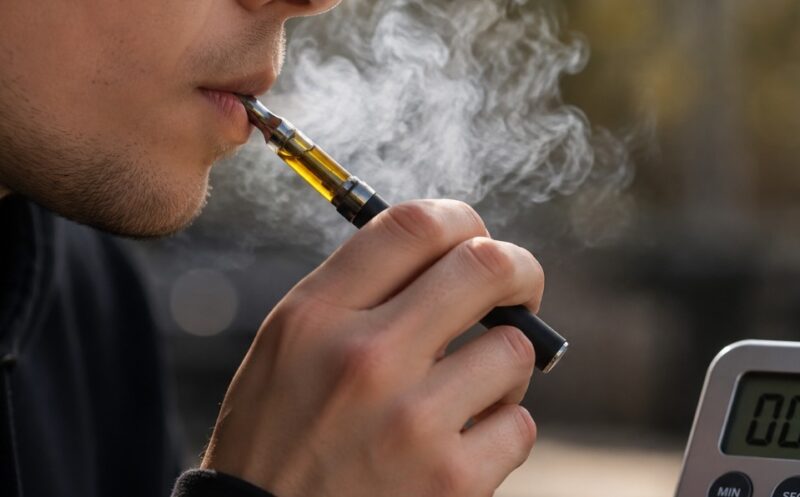
Back-to-back draws can create heat faster than oil can replenish the wick. Each inhalation removes some oil near the coil, and another immediate draw can expose sections of wick that have not yet absorbed enough concentrate.
Repeated heating under dry conditions can first create a hot, sharp hit. Continued use may eventually scorch wick material and produce a persistent bitter flavor.
Timing and draw duration play an important role in allowing oil to resaturate the heating area:
- Wait about 30 to 60 seconds between hits.
- Keep each inhalation slow and approximately 2 to 4 seconds long.
Long, aggressive draws may create additional heat and alter pressure inside the cartridge. Controlled inhalations paired with short resting periods can support steadier oil movement and more consistent vapor.
Low Oil Levels
Low oil levels can make wick saturation difficult even when a cartridge still appears to contain usable concentrate.
Once oil drops near the intake ports, gravity and cartridge position can pull liquid away, leaving sections near the coil poorly supplied.
Oil quantity becomes especially important near the end of a cartridge:
- Problems may become more noticeable when roughly 10 to 20% of the oil is left.
- Replacement at approximately 5 to 10% can reduce the risk of heating a dry wick.
Horizontal storage can make low-oil problems worse by allowing concentrate to shift away from intake openings.
Visible oil below the intake holes is an important warning sign. Continued use at that stage can produce harsh vapor and may permanently damage internal material.
Clogs and Restricted Oil Flow
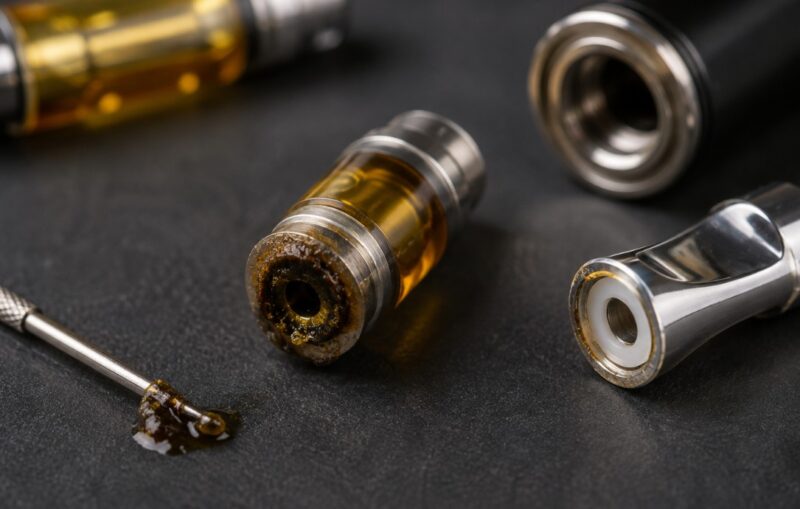
Thick cannabis concentrates can block airflow or oil channels, especially after exposure to cold temperatures.
Restricted movement can prevent enough oil from reaching the heating element, causing the coil to operate with inadequate wick saturation.
Different symptoms can point to different flow problems:
- Weak airflow can indicate a clogged airway.
- Muted flavor can appear when oil delivery is restricted.
- Bubbling or gurgling can indicate excess liquid inside the heating chamber.
Gentle warming can loosen thick oil and improve movement through internal channels. Devices equipped with a preheat setting may also help soften concentrate around intake areas before normal use.
Excessive heating should be avoided while clearing a clog. Too much heat can thin oil excessively, increase leaking, flood the chamber, or expose sensitive compounds to unnecessary thermal stress.
Improper Storage
Heat, ultraviolet light, and extreme cold can alter cannabis oil consistency and quality. Cold temperatures increase viscosity, making oil harder for a wick to absorb.
Excessive warmth can make concentrate too thin, increasing the risk of leaking or flooding near the heating chamber.
Extended heat and light exposure can degrade cannabinoids and terpenes. Such changes may affect flavor, aroma, viscosity, and overall cartridge performance.
Humidity and extreme temperature changes should also be limited. Stable storage conditions can help preserve oil consistency and reduce problems involving clogs, flooding, or poor saturation.
Damaged Coil or Wick
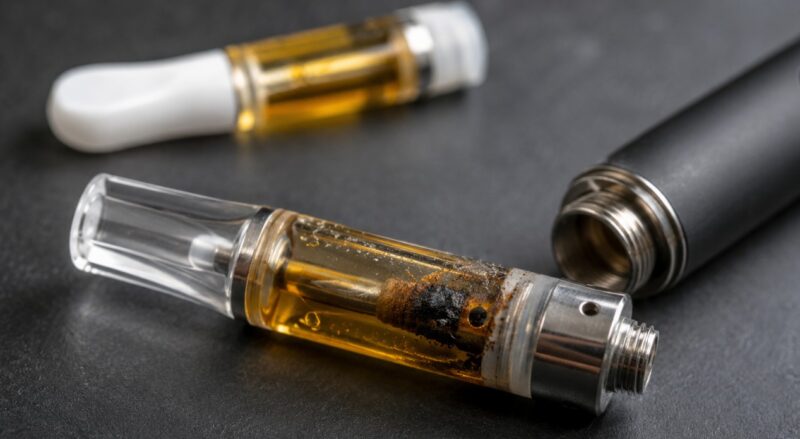
A dry hit often feels hot, sharp, and relatively flavorless. A true burnt hit usually has a bitter, scorched quality that lingers after inhalation.
Repeated burnt flavor despite adequate oil levels can indicate that internal material has already been damaged. Once wick fibers become scorched, normal oil saturation may not restore clean flavor.
Condition after cooling can help separate temporary overheating and permanent damage:
- A mildly overheated coil may perform normally again after resting.
- A scorched wick generally cannot be fully restored.
- Persistent burnt flavor after corrective steps can indicate that replacement is needed.
Lowering voltage, allowing adequate saturation time, checking oil level, and clearing possible flow restrictions are useful checks before deciding that hardware damage has occurred.
How to Prevent a Burnt Taste
Starting at a low voltage reduces the chance of overheating oil during initial use.
Settings near 2.0 to 2.4 volts can provide a conservative starting point, followed by gradual adjustment when necessary. Many cartridges operate effectively somewhere near 2.4 to 3.2 volts.
Adequate saturation time is equally important. New cartridges should have enough time for oil to reach the wick before heating begins.
A 30-minute upside-down rest followed by about 30 minutes upright can encourage oil distribution inside some cartridge designs.
Several operating habits can lower the chance of dry or scorched hits during regular use:
- Use a preheat function when oil is thick or cold.
- Allow around 30 to 60 seconds between inhalations.
- Keep draws slow and about 2 to 4 seconds long.
- Stop using a cartridge before oil falls below its intake openings.
- Consider replacement while roughly 5 to 10% of the oil is still visible.
Upright storage at room temperature also supports proper oil position. Keeping cartridges in a cool, dark place protects them against excessive heat, extreme cold, humidity, and direct sunlight.
Summary
Burnt taste in cannabis oil products usually develops when coil temperature becomes too high or oil cannot reach the wick quickly enough. Excessive voltage, poor initial saturation, repeated draws, low oil levels, clogged channels, and improper storage can all contribute to the problem.
A dry, sharp hit can act as an early warning sign. Persistent bitterness or a scorched aftertaste may indicate actual wick or coil damage, particularly when normal flavor does not return after cooling and resaturation.
Proper handling can substantially lower the risk of burnt-tasting vapor and premature cartridge damage.